The merging of modern AI technology and 3D modeling holds significant potential. Skilled designers are combining advanced 3D rendering programs with direct ChatGPT prompts, producing varied results. While there is still work to be done, the integration of current AI capabilities with 3D rendering applications shows great promise.
How good is AI sketch to video?
While some traditional artists may be hesitant to use AI tools in their workflow, it is clear that modern image conversion tools have made huge strides.
Below is a breakdown of the general creative process used for this test.
Initial Concept
Preliminary artwork
Import into OpenArt
Reiterate re-render as needed
Initial Concept
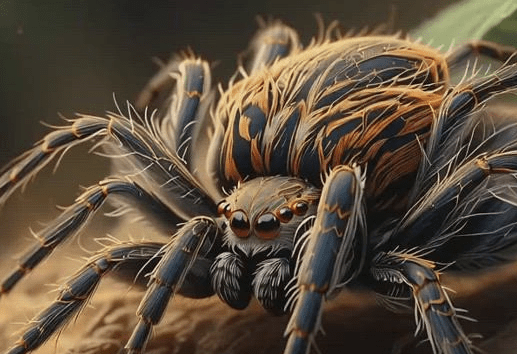
The initial concept was to create a hairy spider, similar to a wolf spider
The spider would have realistic features, with some subtle exaggerations
Preliminary Artwork
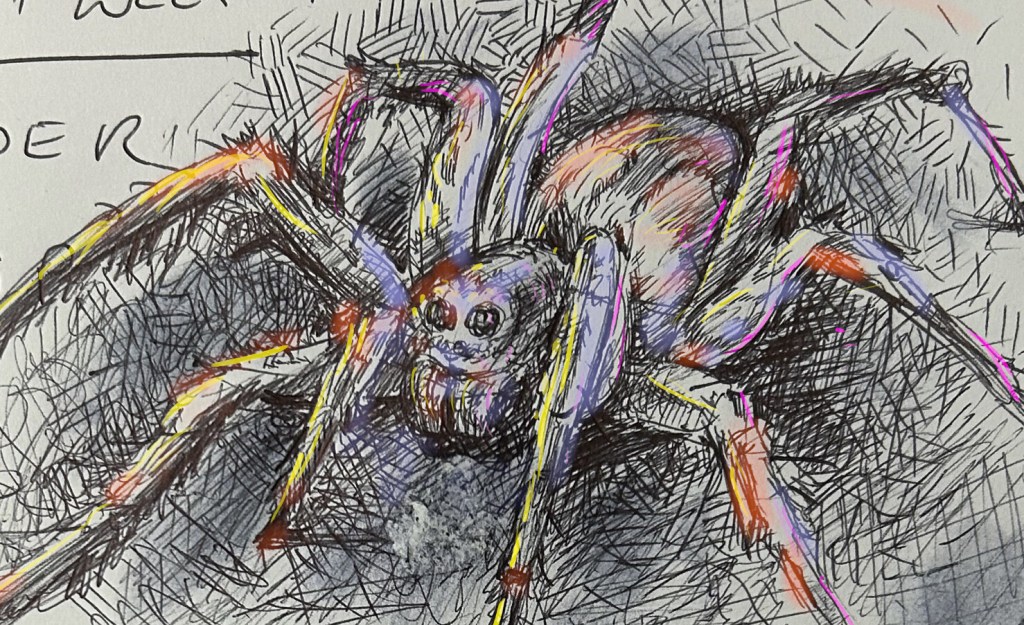
A hand drawn sketch of the spider
Form, texture, and color are added
Enough information is given to provide guidance for the final product
Import into OpenArt
Import the image into OpenArt
Use the sketch to image feature
render and re-render image as needed
adjust prompts and creativity settings
Additional images may be used to add to the scene or provide style guidance
The merging of modern AI technology and 3D modeling holds significant potential. Skilled designers are combining advanced 3D rendering programs with direct ChatGPT prompts, producing varied results. While there is still work to be done, the integration of current AI capabilities with 3D rendering applications shows great promise.
How good is AI sketch to image?
While some traditional artists may be hesitant to use AI tools in their workflow, it is clear that modern image conversion tools have made huge strides.
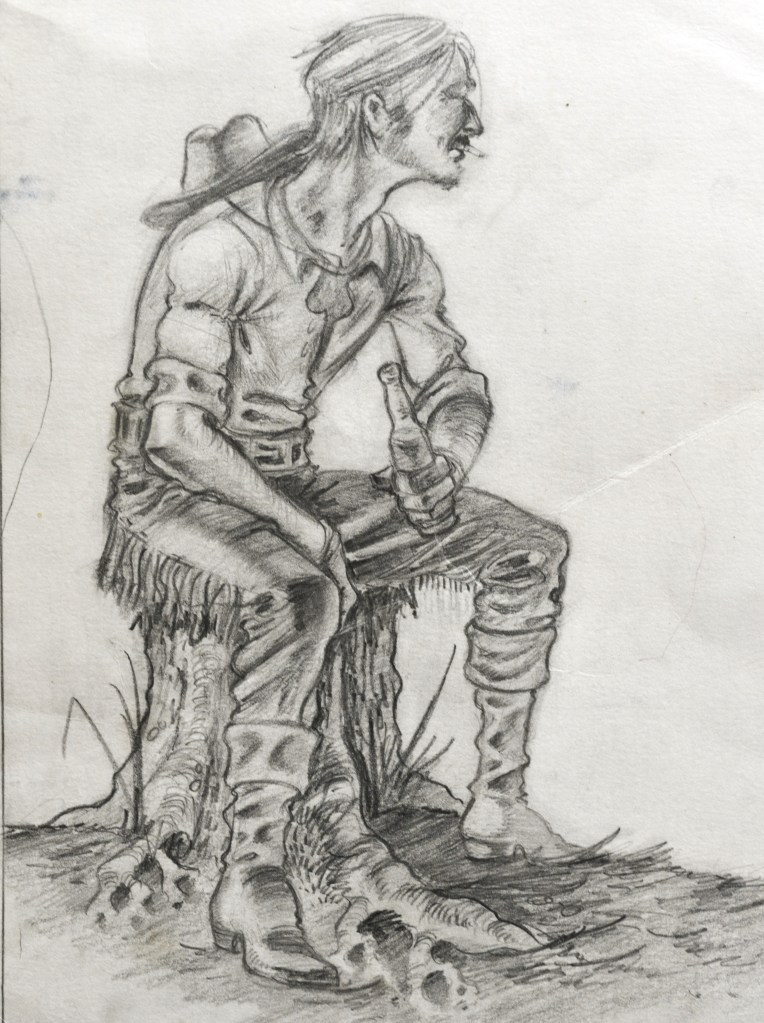
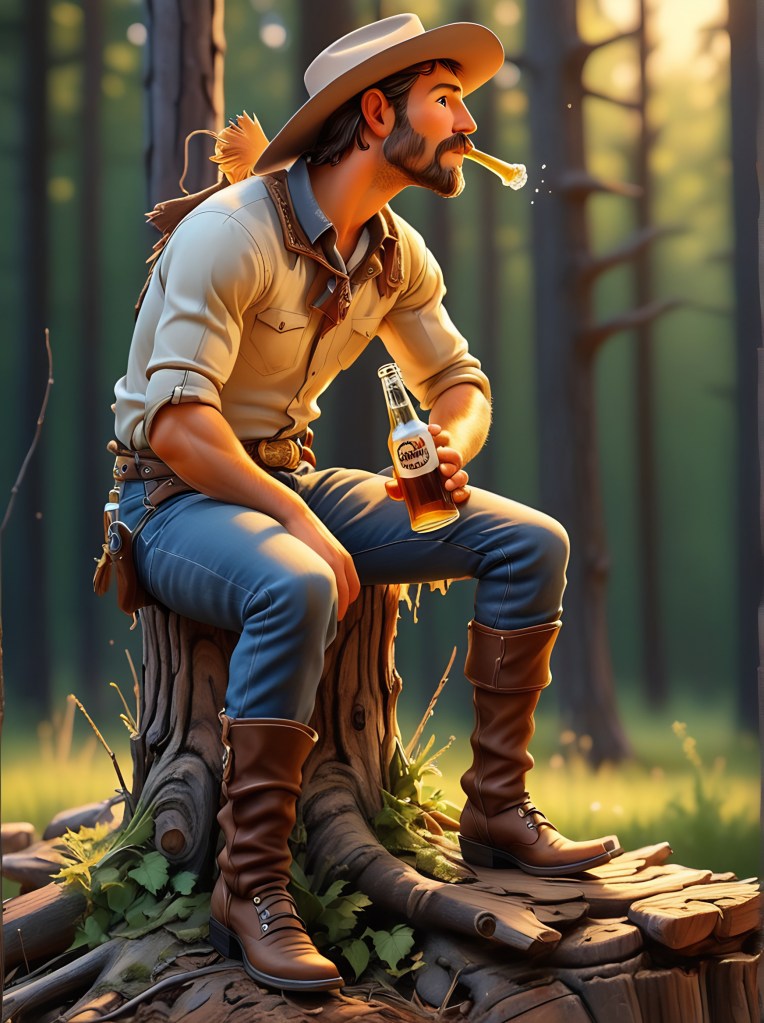
The OpenArt platform was used to experiment with various drawings, including some incomplete works, such as the example of the cowboy below. While the initial results were impressive, there are some obvious issues. In this rendered example, no additional prompts or edits were applied. Many areas could be refined through further iterations or with digital editing software.
Take away for traditional artists
For artists concerned about the influx of AI-generated content and its potential impact on their work, it can be valuable to consider how these new tools might be incorporated into existing workflows without compromising creative intent.
In conclusion, while some may be wary of incorporating AI tools into their creative process, it is clear that AI can be leveraged without compromising the original creative intent.
Hand drawn sketch of a cowboy on a wooden tree stumpFinal AI Rendering of a cowboy on a wooden tree stump
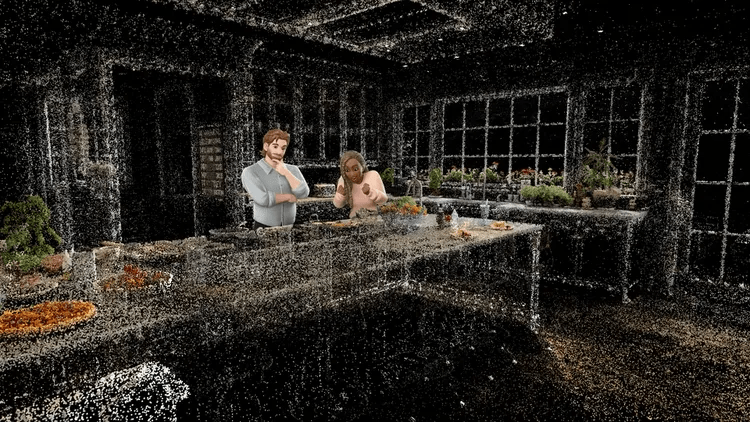
Meta has made a big update to their Hyperspace capture ability, which allows users to scan their real environment and create a virtual environment other users can experience.
Why is this big news? Developer tools have been available for Meta’s Mixed Reality Toolkit, allowing for advanced scene scanning capabilities for developing needs, however, with Hyperspace scanning, consumer users now have access to this technology.
Screen capture of Meta’s Hyperscape 3D environment scan
The merging of modern AI technology and 3D modeling holds much potential. Nimble designers are combing advanced 3D rendering programs, with direct chatGPT prompts, with varied results. While there a still some work that needs to be done, the potential of integrating current AI capabilities with 3D rendering applications.
Some designers are using the open source 3D rendering software Blender, in conjunction with ChatGPT and other AI assistants. While many are focused on automating workflow processes, there have been significant advancements building actual 3D elements using text prompts.
In this example we see the limits of the integration, with varied results from impressive to “hmmm, odd”. The obligatory donut most Blender users are familiar with is used as an example. ChatGPT made few strange choices, as well as some “wow” moments, however there are obvious limitations. Check out the link below for more information.
What possibilities could the merging of AI and 3D modeling hold?
I imagine that soon processing power and AI technology will allow for “real time” 3D rendering with more intuitive prompt responses. Will we soon see this technology filter into user applications? While we don’t know for sure how fast AI technology will progress, and exactly how it will be integrated with 3D modeling long term, there are many exciting possibilities on the horizon.
WordPress is extremely flexible, allowing for building many different types of websites. With over 58,000 free integrated plugins and an entire eco-system of plugins and modules3.
Joomla is very flexible offering, offering advanced user management and allowing for different content types. Multiple templates are available and multi-language support6.
Drupal offers a wide level of flexibility, however this comes with the need for third party development costs.
Skill Level
WordPress requires no code experience to begin building a website and a good choice for novice users and those without development experience.
Joomla offers a page builder and other features, allowing users to build sites with direct code experience, however the interface may be challenging for new users7.
Drupal is not considered a platform for novice users, and is heavily dependent on third party development for adding features and integrations.
Pricing/Affordability
WordPress.org is an Open Source program with free plugins and integrations. WordPress.com is a paid site that offers limited functionality.
Joomla is a free Open Source program, so the upfront cost is the same as WordPress, however long term costs may be more, given the greater number of WordPress free and inexpensive integrations and plugins. Hosting options may be higher, due to performance requirements.
While Drupal is an Open Source product, the heavy reliance on development costs need to be considered in the long term cost.
Hosting Options
WordPress.org does not offer hosting options. This is an extra-cost to the user, however inexpensive hosting third party options are available4.
Joomla does not offer hosting options. This is an extra-cost to the user, however inexpensive hosting third party options are available.
Drupal does not offer hosting options. This is an extra-cost to the user, however inexpensive hosting third party options are available9.
Community Support
There is a large community of users as well as formal support channels (forums)5.
While Joomla does not have the large size user base as WordPress, they do offer a support portal8, and there are many third party support agencies with knowledge of the Joomla architecture.
While Drupal does not have a large user base, in comparison to WordPress, there is an active support forum on druppa.org, as well as third party development support10.
Content Management System Comparison Table
References
[1] – “W3Techs – World Wide Web Technology Surveys.” Https://W3techs.Com/, w3techs.com/. Accessed 27 Oct. 2025.
[2] – “Usage Statistics and Market Share of Drupal.” Https://W3techs.Com/, 20 Dec. 2023, w3techs.com/technologies/details/cm-drupal#:~:text=Request%20an%20extensive%20Drupal%20market,Historical%20trend. Accessed 27 Oct. 2025.
[5] – “Welcome to the WordPress.Org Support Forums.” Https://Wordpress.Org, wordpress.org/support/welcome/. Accessed 27 Oct. 2025.
[6] – Jackson, Brian. “Joomla Vs WordPress – Which One Is Better? (Pros and Cons).” Https://Kinsta.Com, 20 Dec. 2023, kinsta.com/blog/joomla-vs-wordpress/. Accessed 27 Oct. 2025.
William has a passion for the arts and enjoys sharing his work as well as emerging tools and technologies available to the modern artist and musician. This site is intended to spotlight new technology in music and art production.
We will feature new software, hardware, and techniques that are lowering the barrier of entry like never before. Whether you are an experienced artist or just beginning your journey, we feel you will be able to take something of value from our site.
If you are new to art or music, and looking for some guidance and motivation, please see our articles on new technology and practices to assist your adventure. Having a hard time learning how to create digital music? Maybe voice to MIDI converter would help you get your ideas out. Love to draw but don’t know where to start in the world of digital art? Check out our tutorials on digital art freeware and exercises.Do you have a friend or child who just needs that extra push? Tired of hearing people, old and young, saying things like, “I can’t draw a stick figure”, or “I can’t carry a tune.”. Let’s combat this defeatist and close-minded attitude with modern technology and a little know-how.
See how new technology and practices an help even older artists and creators continue creating. Whether due to age or physical disability, these new advancements can allow individuals to draw, paint and play instruments; an idea that may have seemed impossible before. Imagine humming an old tune from your heyday, and, in real time, software converting your humming into a “virtual instrument”, allowing those without the ability to physically play an instrument to create music instantly. This is one example we hope to spotlight on this site.
 William R. Brown